
 Image 1 of 1
Sunday, December 6 · 10:30am - 12:00pm PT/ 1:30pm - 3:00pm ET · 1.5 CE credits · $65
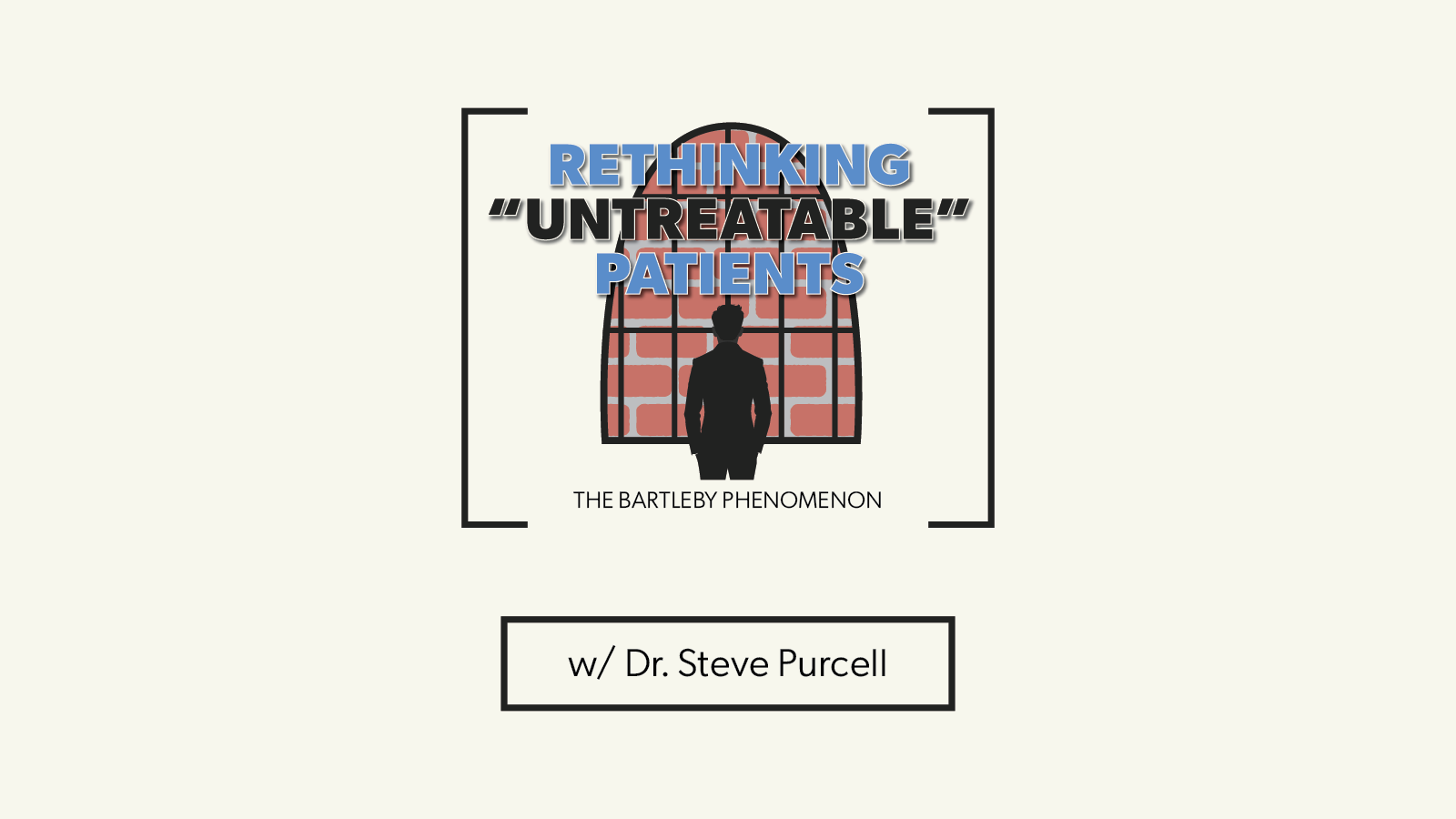
What happens when the analyst is the one who would prefer not to? Some treatments stall, and the patient takes the blame. Clinicians reach for labels like perverse, narcissistic, or untreatable, and answer a patient’s refusal with still more interpretation. But patients with early relational trauma often communicate non-verbally, through voids and deadness that words don’t reach, and the feelings they stir in us can be hard to bear. The result is that the clinician’s own aversion goes unexamined, treatments stall or end, and patients live through the old experience of not being recognized. Using Melville’s “Bartleby, the Scrivener” as an allegory, Dr. Purcell makes the case that an analyst’s repulsion is a self-protective, humanly expectable antipathy, and that finding ways to be with the patient can bring a stalled treatment back to life.
Learning objectives
Identify the clinical features of early relational trauma that appear as inner voids and psychic deadness, and explain why these states are often invisible to clinicians and resistant to verbal interpretation.
Distinguish an analyst’s self-protective antipathy toward a traumatized patient from transference and countertransference, and recognize its early signs in one’s own work.
Apply receptive, non-verbal, and relational approaches, including being with the patient and consultation, to re-engage stalled treatments.
About Dr. Purcell
Stephen Purcell, MD, is a psychoanalyst in private practice in Portland, Oregon. His current interests are the sequelae of early relational trauma and dissociation and the non-verbal aspects of therapeutic process. He has published book chapters and articles on termination, dissociation, the analyst’s way of being, theory as a source of countertransference, and the treatment of perverse character structures. His most recent papers are “Un-thinking Technique” and “The Bartleby Phenomenon.” He is on the faculties of the Oregon Psychoanalytic Institute, the San Francisco Center for Psychoanalysis, and the Psychoanalytic Institute of Northern California.